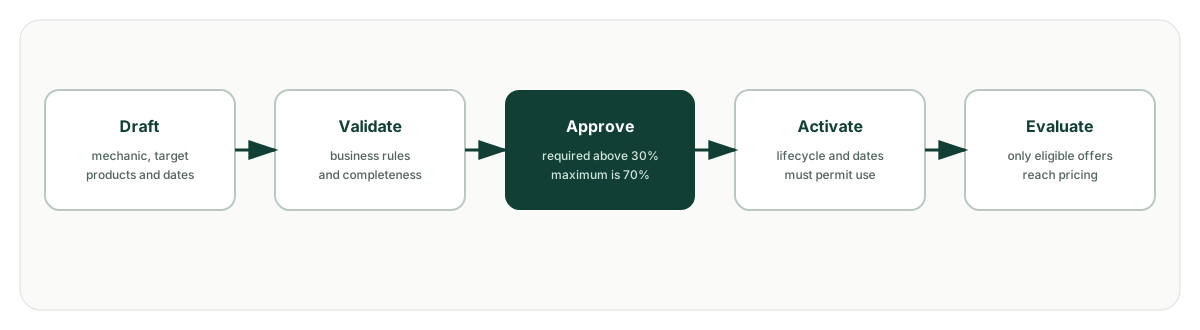
Campaign scope, dates, mechanics and approval state determine whether an offer may influence pricing.
BlueShop Commercial Value — As Built
What this showcase explains: teams govern commercial intent, customers receive one understandable price, Order preserves accepted value, and Analytics measures delivered performance without becoming a pricing authority.
1. What BlueShop Delivers
Commercial complexity stays behind a simple customer outcome: one eligible price and one accepted order history.
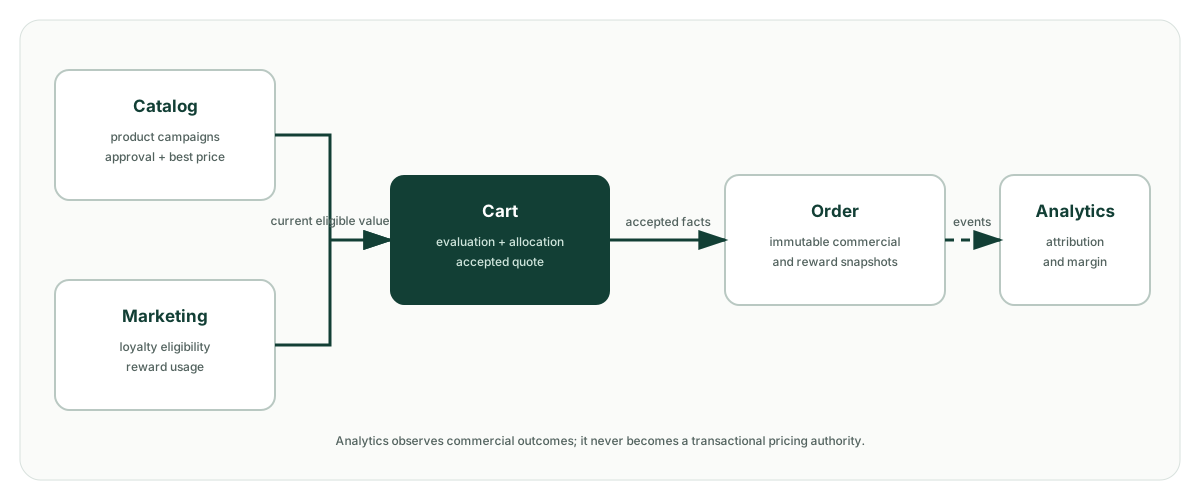
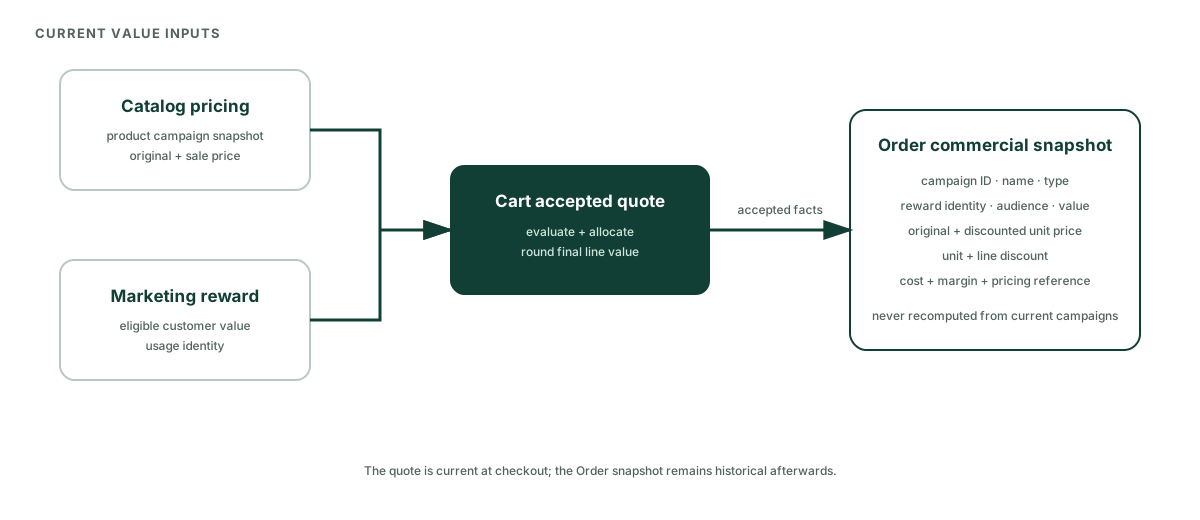
Cart owns the quote; Order stores the selected campaign, reward, price, discount, cost and margin snapshots.
Practical example: two approved campaigns offer 35% and 45% off the same CHF 54 product. BlueShop displays one CHF 29.70 result, preserves that accepted value in Order, and later measures attributed revenue and margin.
2. Best Customer Value Wins
The first film follows offer governance, overlap and the final storefront result with burned-in narration.
OFFER GOVERNANCE + OVERLAP / 2M 33.12S
Best Customer Value Wins
A manager publishes a CHF 54 product, creates 35% and 45% product campaigns, submits and approves both governed offers, then proves that the storefront exposes only the stronger CHF 29.70 price.
01
Prepare a sellable productThe manager completes and publishes the product before any campaign can produce customer value.
02
Govern both offersEach discount above 30% moves through submission and approval.
03
Show one answerBoth offers are eligible, but the lowest calculated price reaches the storefront.
3. Loyalty Value Reaches Profitability
The second film extends the story from governed reward eligibility to order outcome and commercial measurement.
REWARD LIFECYCLE + MARGIN / 3M 17.40S
Loyalty Reward and Profitability
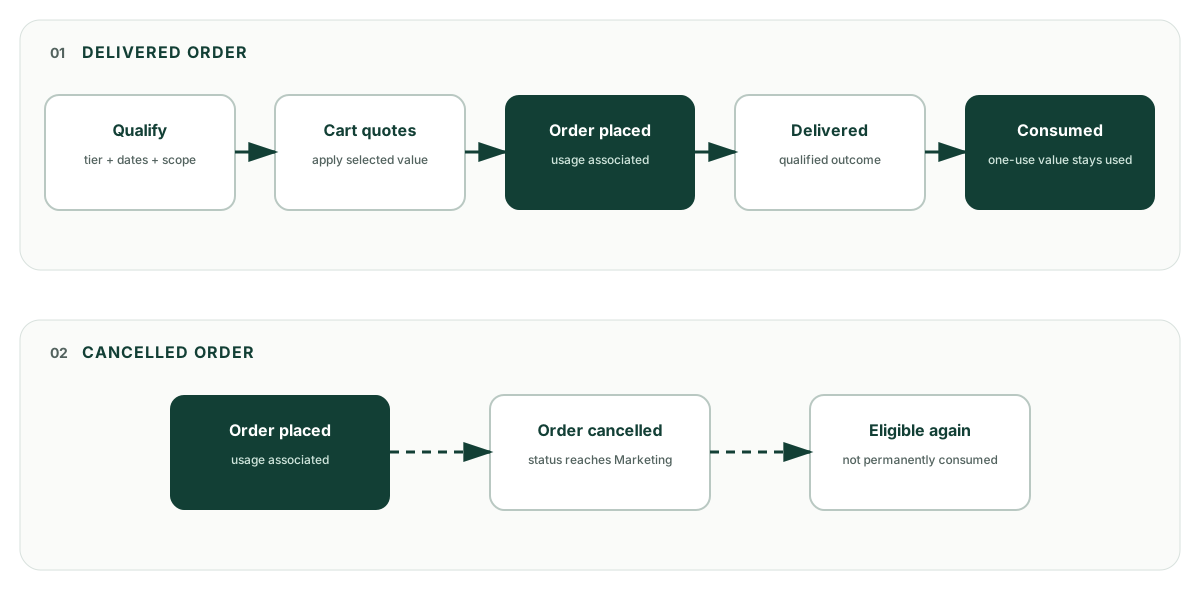
A Platinum customer qualifies for a governed reward. Cancellation makes that reward reusable; delivery makes one-use consumption final; Analytics connects qualified spend to margin.
01
Qualify customer valueMarketing evaluates tier, dates, scope and prior use before Cart applies the reward.
02
Follow the order outcomeA cancelled order does not permanently spend the reward; a delivered order does.
03
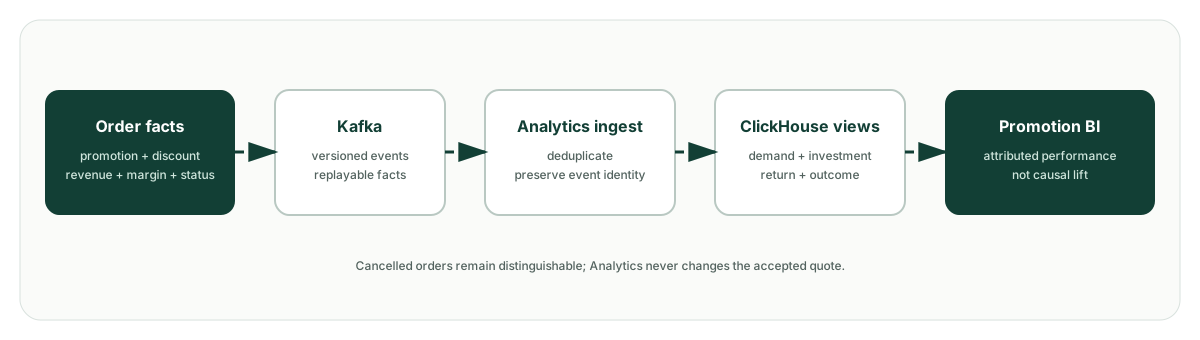
Measure delivered economicsOrder-time value, revenue and margin facts reach commercial reporting.
4. Business Result
- 01High discounts require approvalProduct discounts above 30% cannot become eligible through submission alone.
- 02Overlap remains understandableThe customer receives the lowest calculated eligible product price, not competing campaign mechanics.
- 03Accepted value stays immutableLater campaign edits or expiry do not rewrite an existing Order.
- 04Measurement follows outcomesDelivered and cancelled orders remain distinguishable in reward use and performance views.
How commercial value works
The sections below explain ownership, approval, price selection, quote snapshots, reward state and Analytics attribution.
5. Ownership Dependencies
No service owns “commercial value” as one shared model. Each service owns one decision and hands accepted facts across the boundary.
6. Offer Governance
A campaign’s lifecycle decides whether its mechanics may reach pricing. Product discounts above 30% require a manager decision; the maximum permitted discount is 70%.
| Control | Decision protected | Evidence retained |
|---|---|---|
| Draft and validation | Offer mechanics and target scope are complete | Campaign configuration and products |
| Approval threshold | Any product discount above 30% requires review | Decision, actor, time and reason |
| Schedule and lifecycle | Approved offers remain inactive outside their permitted period | Dates and transitions |
| Cancellation | Future eligibility stops without rewriting historical Orders | Cancellation state and audit history |
7. Lowest Eligible Product Price Wins
Catalog evaluates active matching product campaigns, calculates each resulting price, then selects the lowest customer price.
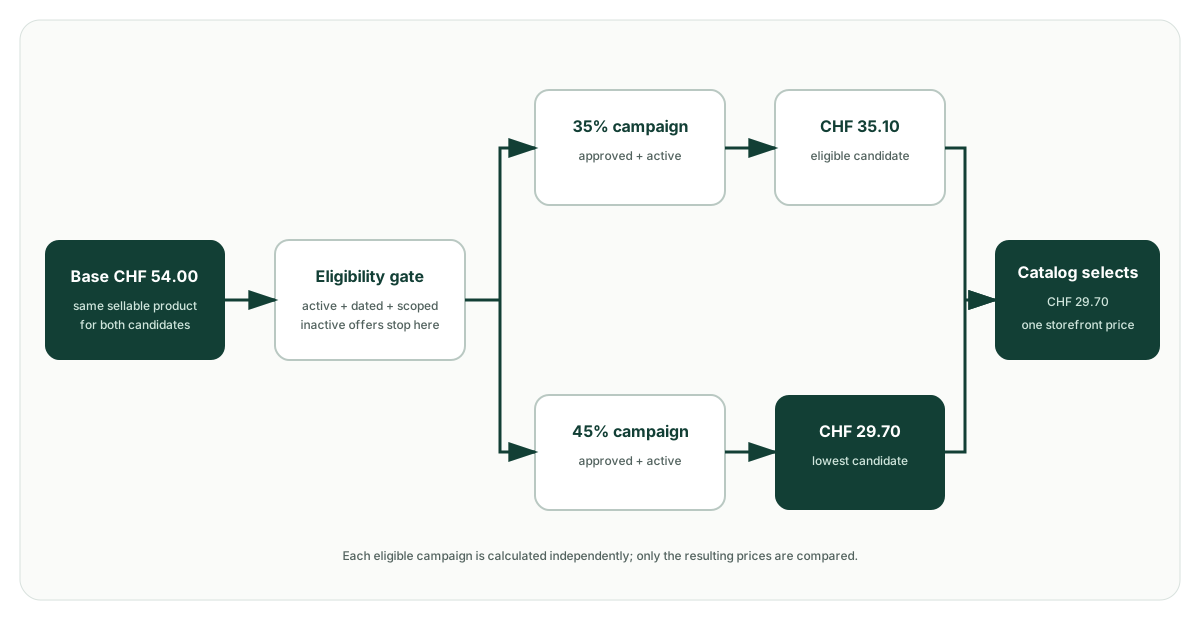
Demonstrated decision: 35% produces CHF 35.10; 45% produces CHF 29.70. Both are approved and active, so CHF 29.70 is selected and displayed.
8. Cart Quotes; Order Remembers
The storefront explains current value, but Cart is the money authority. Order receives the accepted snapshots rather than recomputing from mutable campaign configuration.
9. Loyalty Reward Lifecycle
Marketing owns eligibility and one-use consumption. Cart applies the selected reward and Order status determines whether that use remains final.
10. From Accepted Value to Measurement
Commercial reporting begins with accepted Order facts and later status, not with the mutable campaign form.
11. Explicit Limits
The demonstrated stories are specific. They should not be stretched into unsupported claims about every commercial mechanic.
Offer comparisonThe film proves two product-targeted percentage campaigns. Coupons, bundles, gifts and cart-level rewards have separate rules.
ApprovalApproval above 30% does not override dates, lifecycle, scope, stock or checkout validation.
Quote ownershipOrder snapshots accepted facts; it does not own or reevaluate current campaigns.
Loyalty outcomesThe film demonstrates cancellation and delivery, not every refund, return, dispute or partial-delivery path.
BI attributionCurrent views exclude cancelled orders and report attributed Order facts, not incrementality or causal lift.
MediaThe films are silent with burned-in narration; the visible scene descriptions provide the textual alternative.