Product identity, price, promotions, margin and delivery/billing addresses are copied into Order instead of silently changing later.
BlueShop Order Journey — As Built
What this showcase explains: one accepted Cart quote becomes a durable Order, protected Stock, a controlled warehouse journey, a delivered purchase and finally moderated product feedback.
1. What BlueShop Delivers
The customer experiences one continuous purchase while each domain keeps authority over its own decision.
Stock commits the reservation to the Order, Logistics records the current minimal delivery path, and delivery opens the verified-review path.
Practical example: a customer buys the Alpine Espresso System for CHF 108.10 using separate Zürich delivery and Geneva billing addresses. The order survives later Catalog or profile changes, reaches delivery through the warehouse, then supports a moderated five-star product review.
2. Purchase Becomes Public Product Feedback
The retained film follows the complete visible journey with burned-in narration.
CHECKOUT → DELIVERY → REVIEW / 2M 30.64S
Address, Order, Delivery and Review
The same product remains recognizable through Cart, distinct addresses, paid Order, warehouse transitions, delivery, review submission, moderation and publication on the product page.
01
Accept the commercial momentThe customer reviews product, price, delivery, billing and payment method before placement.
02
Create durable historyAn order number and immutable snapshots remain available after the converted Cart becomes empty.
03
Move through the warehouseLogistics records picked, shipped and delivered in order.
04
Turn delivery into trusted feedbackThe customer submits a review; moderation approves it; the product page displays the result.
3. One Journey, Clear Stages
The journey progresses through explicit decisions rather than one service pretending to own everything.
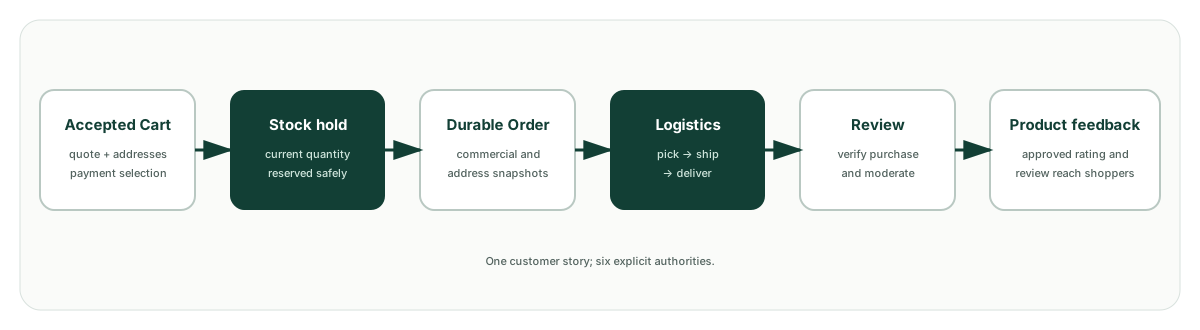
4. Business Result
- 01Accepted value stays explainableOrder preserves the commercial and address facts accepted at placement.
- 02Physical stock follows the orderReservation, cancellation and shipment remain tied to Stock authority.
- 03Warehouse progress cannot skip statesPick precedes ship; ship precedes delivery.
- 04Feedback has purchase contextNormal review submission requires delivery and explicit moderation before publication.
How the order journey works
The sections below explain service ownership, reservation commitment, immutable snapshots, the current minimal Logistics flow, review publication and failure boundaries.
5. Ownership Dependencies
The journey is connected, but authority never collapses into one shared model.
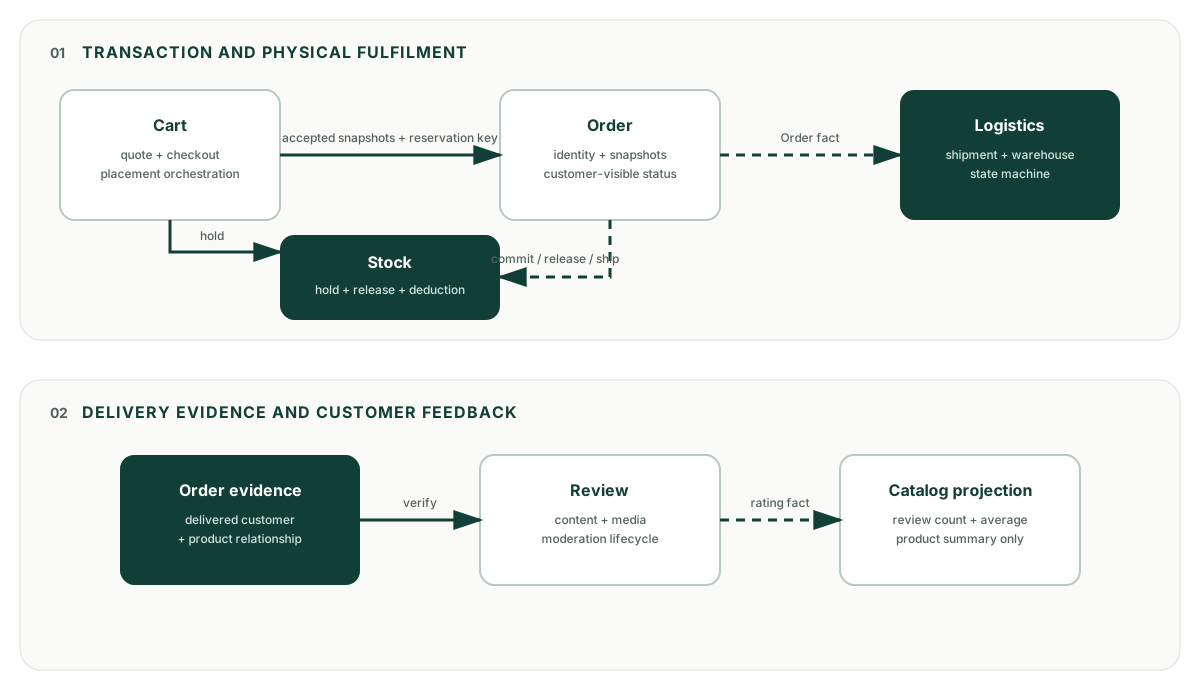
| Boundary | Authoritative decision | Fact handed onward |
|---|---|---|
| Cart | Quote, checkout session, selected addresses/payment and placement orchestration | Accepted line, campaign, address and reservation-key snapshots |
| Stock | Availability, holds, cancellation release and shipment deduction | Reservation state and stock movements |
| Order | Order identity, immutable commercial history and customer-visible status | Order lifecycle events and delivered-purchase evidence |
| Logistics | Shipment work and warehouse transitions | Picked, shipped and delivered facts |
| Review | Review content, moderation and publication lifecycle | Approved, edited or deleted rating facts |
| Catalog | Product-facing review count and average-rating projection | Customer product presentation |
6. Reservation Commitment
Cart revalidates the hold immediately before Order creation. After creation, it asks Stock to commit that reservation to the Order. The reservation key also travels with the Order so Stock can repair a lost synchronous commitment call.
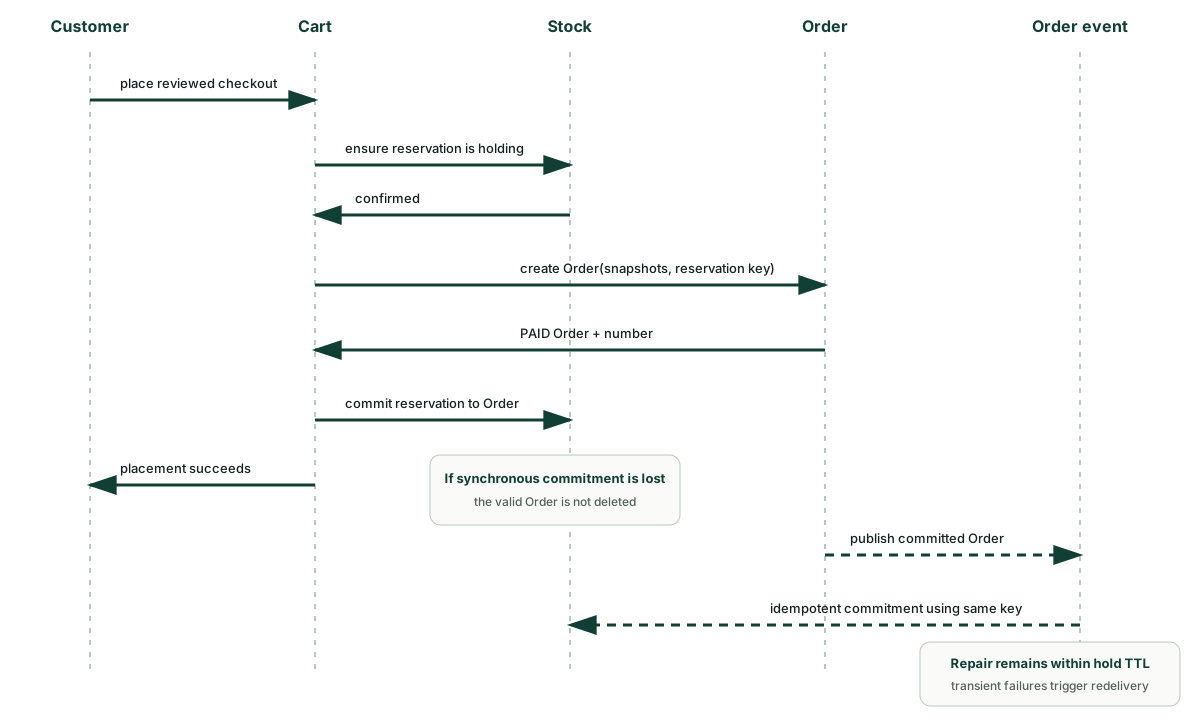
Current transitional seam: Cart triggers this immediate post-order commitment because BlueShop currently ships a minimal Logistics delivery path without a dedicated Fulfilment capability. This is placement orchestration, not Cart ownership of fulfilment. The current Stock API method is named
fulfil; its actual effect here is to move the reservation from an active checkout hold to committed Order stock while keeping the quantity reserved. The Order Kafka event already repeats the same commitment idempotently as recovery. The synchronous path is still active, so it is not legacy; moving to Kafka-primary commitment remains an architectural follow-up. A future Fulfilment bounded context is a candidate, not an implemented boundary.Placement gate: checkout must be reviewed, both addresses must exist, the Cart must still exist and every Stock reservation must still be holding. Expired or unprovable holds fail closed before Order creation.
7. The Commercial Moment Is Preserved
Order stores what the customer accepted instead of depending on mutable Catalog, campaign or profile reads later.
| Snapshot group | Preserved facts | Why it remains local to Order |
|---|---|---|
| Line identity | Product/variant IDs, names and SKUs | Later Catalog edits cannot rewrite what was ordered |
| Commercial value | Original and allocated unit price, discounts, cost, margin and pricing snapshot ID | Historical totals and profitability remain reproducible |
| Addresses | Separate delivery and billing street, postal code, city and canton | Customer profile edits do not alter the order record |
| Operational link | Order number and checkout reservation key | Stock can reconcile holds to the durable Order |
Current payment behavior: while no payment gateway is integrated, the storefront creation path creates the Order directly as
PAID. It records the selected method but does not claim external authorization, capture, refund or chargeback behavior.8. Order and Logistics Event Flow
A paid Order creates one Logistics work item. Logistics owns the physical state machine and reports each accepted transition back to Order.
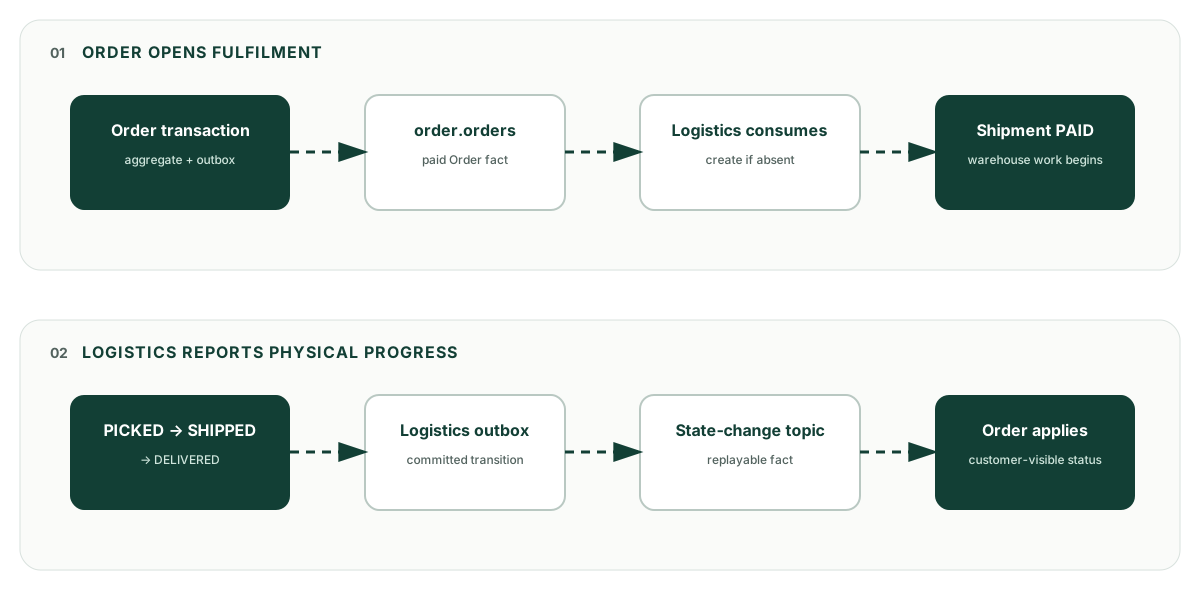
| Current state | Allowed next | Operational meaning |
|---|---|---|
PAID | PICKED or CANCELLED | Warehouse accepts work; cancellation remains possible before picking |
PICKED | SHIPPED | The parcel may leave only after picking |
SHIPPED | DELIVERED | Delivery can be recorded only after dispatch |
DELIVERED / CANCELLED | None | Both are terminal in Logistics |
9. Delivery Becomes Product Feedback
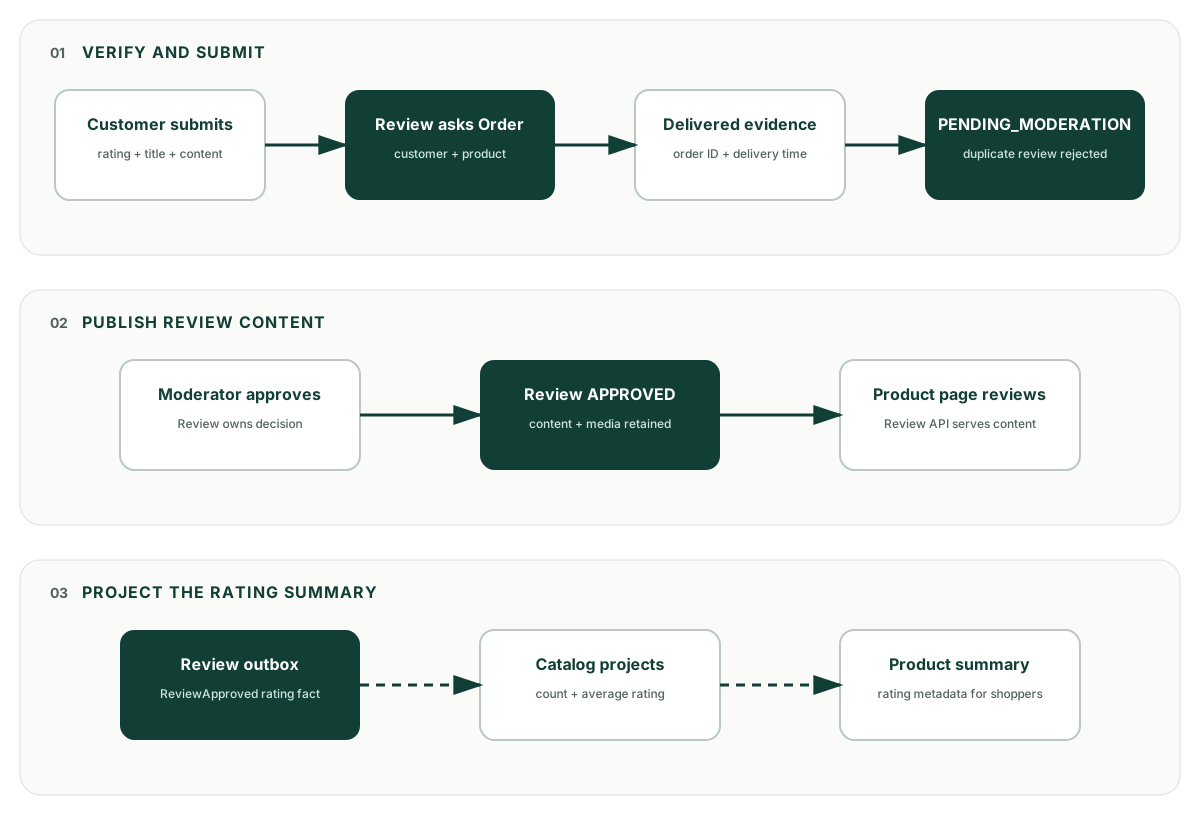
Review verifies the customer/product pair against delivered Order evidence, prevents duplicate customer reviews for the product, then owns moderation before Catalog projects the approved rating.
10. Failure and Recovery
Idempotency and outboxes protect retries, but the journey still has explicit reconciliation windows and one current trust weakness.
Stock cannot prove the holdCheckout fails closed before creating an Order.
Post-create commitment call is lostThe Order event carries the reservation key; Stock commits it idempotently.
Order is cancelled before shipmentStock releases committed-but-unshipped reservations; shipped lines remain for the returns flow.
Shipment event is replayedThe unique shipment movement prevents a second physical deduction.
Order or Logistics delivery is delayedOutbox-backed events retry; customer-visible state is eventually consistent.
Review cannot reach OrderThe current circuit-breaker fallback returns synthetic delivery evidence and can admit an unverified review. This is a documented fail-open limit, not verified-purchase protection.