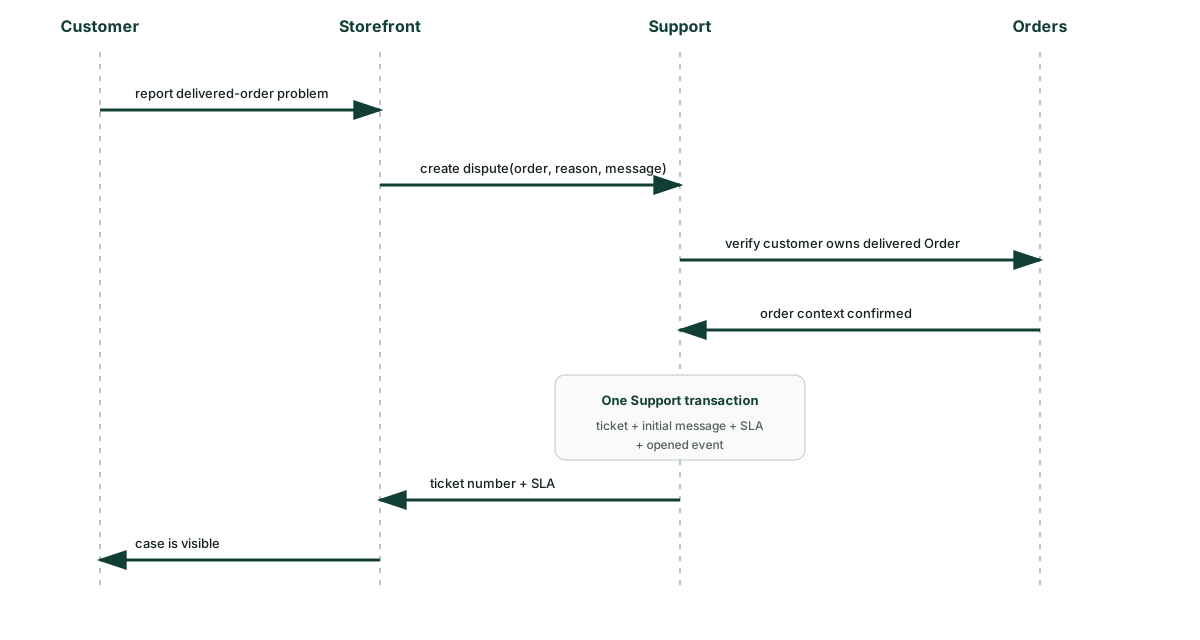
Ownership and delivered state are checked before the dispute, order context and initial message become one ticket.
BlueShop Support Recovery — As Built
What this showcase explains: a delivered-order problem becomes one owned case with trusted context, customer-visible conversation, private agent coordination, explicit lifecycle and measurable resolution.
1. What Support Delivers
The customer receives one visible recovery thread while the support team gets the protected context and private workspace needed to resolve it.
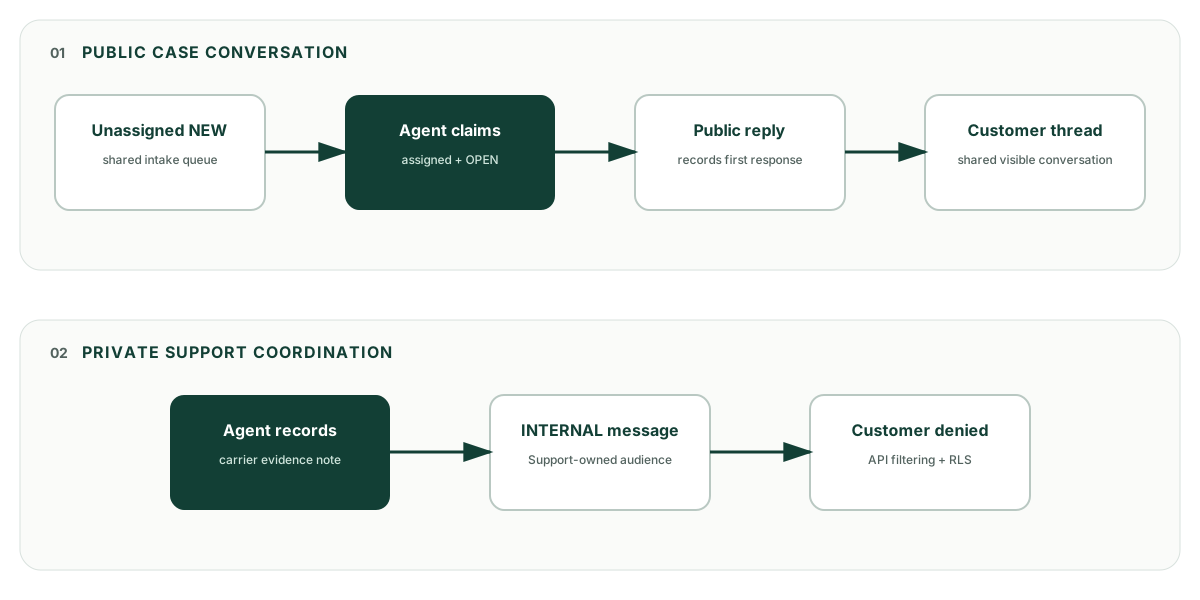
Assignment names the owner; public replies and private notes remain separate; SLA and events make response and resolution observable.
Practical example: a customer reports a damaged delivered parcel. An agent claims the case, checks the exact order and delivery address, replies publicly, records carrier evidence privately, resolves the issue and closes a read-only record.
2. Delivered-Order Dispute Resolution
The complete film connects customer and agent surfaces with burned-in narration.
CUSTOMER + SUPPORT AGENT / 1M 44.24S
From Delivered Problem to Closed Case
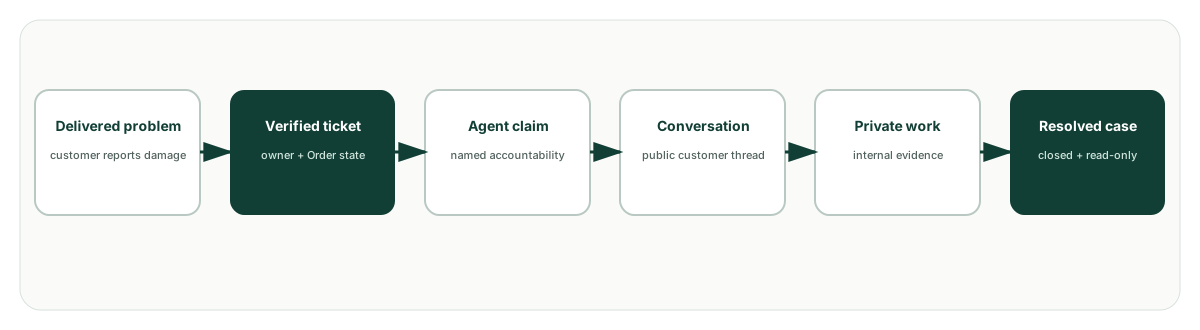
A delivered order becomes a damaged-parcel dispute. The agent claims it, checks customer and order context, exchanges public messages, keeps a carrier note private, then resolves and closes the case.
01
Ground the case in deliveryThe customer reports the problem from the delivered Order, carrying order context and the first message.
02
Make work accountableAn agent claims the unassigned case and inspects protected customer and delivery context.
03
Separate audiencesThe customer sees public replies; carrier evidence remains an internal Support note.
04
Close with a visible outcomeResolution and closure leave the customer with a complete read-only record.
3. One Case, Clear Stages
4. Business Result
- 01Disputes start with trusted contextThe customer must own the Order and the Order must already be delivered.
- 02Work has a named ownerManual claim moves the case into accountable active work.
- 03Privacy is structuralInternal notes are not merely hidden by the interface; customer access is restricted at service and database boundaries.
- 04Resolution becomes measurableFirst response, lifecycle changes, resolution and closure become durable events and analytical facts.
How Support recovery works
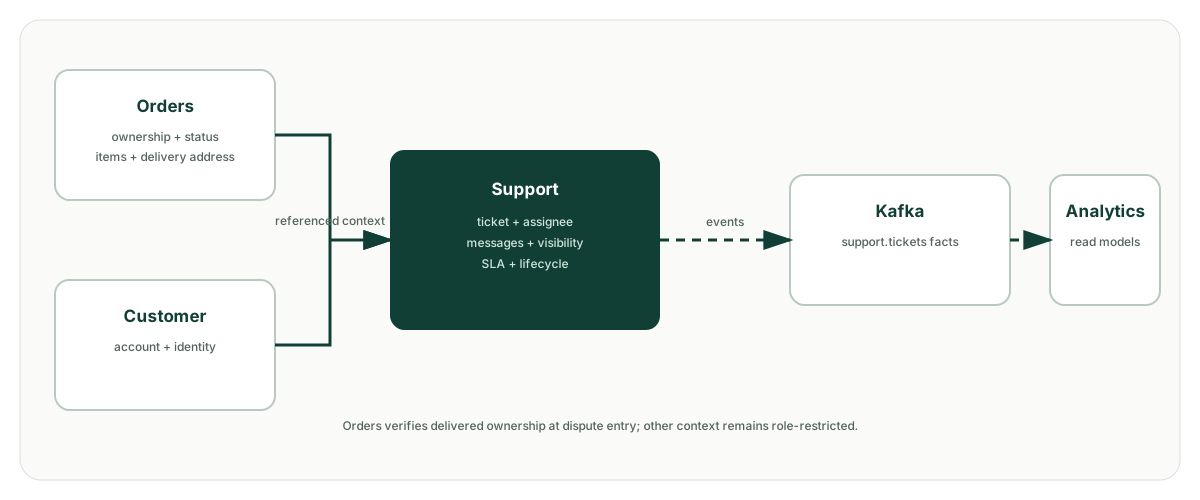
Support owns the case and its conversation. Orders and Customer remain authoritative for their context; Analytics receives facts rather than commands.
5. Ownership and Access
Support references Order and customer identity without absorbing either domain.
| Information | Customer | Support agent | Owner |
|---|---|---|---|
| Own ticket and public thread | Read and reply while writable | Read and reply | Support |
| Internal note | Never exposed | Read and write | Support |
| Order status, items and address | Own Order view | Role-restricted support view | Orders |
| Customer account context | Own account | Role-restricted support view | Customer |
6. Trusted Dispute Entry
Support creates a delivered-order dispute only after Orders confirms both authenticated ownership and DELIVERED state.
7. Assignment, Public Replies and Private Notes
New work enters an unassigned queue. Claim records the agent and opens the case; every message is created with a fixed audience.
8. Ticket Lifecycle and SLA
State controls what action is legal next; persisted SLA policy determines when first response and resolution are due.
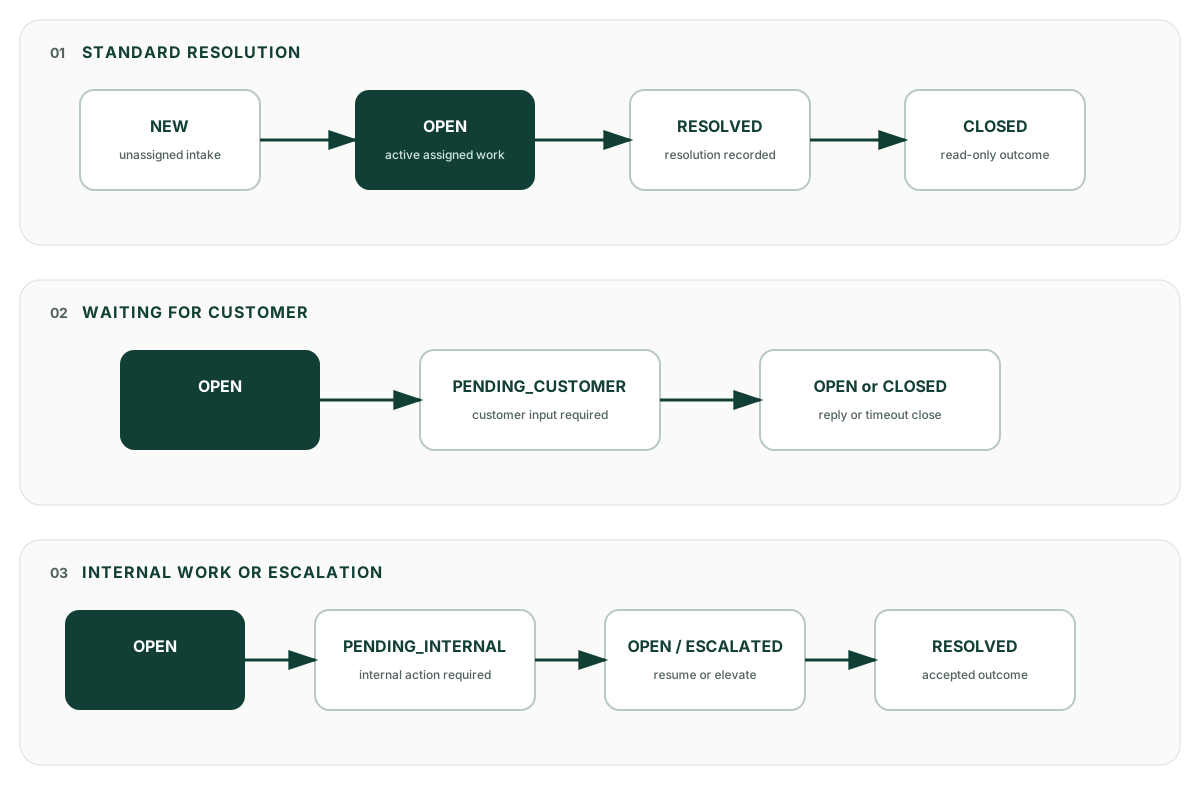
OPEN or ESCALATED. Closure follows RESOLVED or customer-wait timeout. Closed cases may reopen within seven days.Business time: due dates use persisted Europe/Zurich business hours and skip weekends. The current code excludes 1 August explicitly; it does not implement a broader configurable Swiss holiday calendar.
9. Support Events and Operational Analytics
Support saves lifecycle changes with an outbox. Analytics consumes the resulting CloudEvents into independent ClickHouse read models.
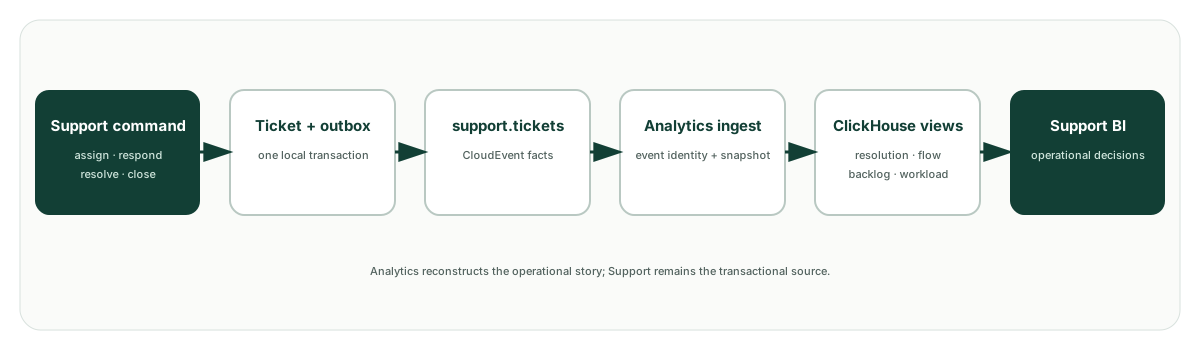
| Read model | Question answered |
|---|---|
support_resolution_daily | How quickly did Support first respond and resolve? |
ticket_flow_daily | How did cases move through the operation? |
ticket_backlog | What unresolved work remains by status, priority and category? |
agent_workload | How much active and resolved work belongs to each agent? |
10. Explicit Limits
Assignment is manualNo skill-, language- or load-balanced automatic assignment is delivered.
Recovery is conversationalThe film does not demonstrate automated refund, replacement or carrier settlement.
SLA escalation is incompleteTargets and due dates exist; automatic breach escalation and a full holiday calendar do not.
One case is demonstratedThe film does not prove concurrent assignment arbitration, merge or bulk operations.
Privacy controls existA dedicated identity-verification workflow and retention/anonymization automation remain outside this journey.
Analytics is derivedDashboard read models measure Support operations but never become the ticket source of truth.